Momentum. Opportunity. Pathways.
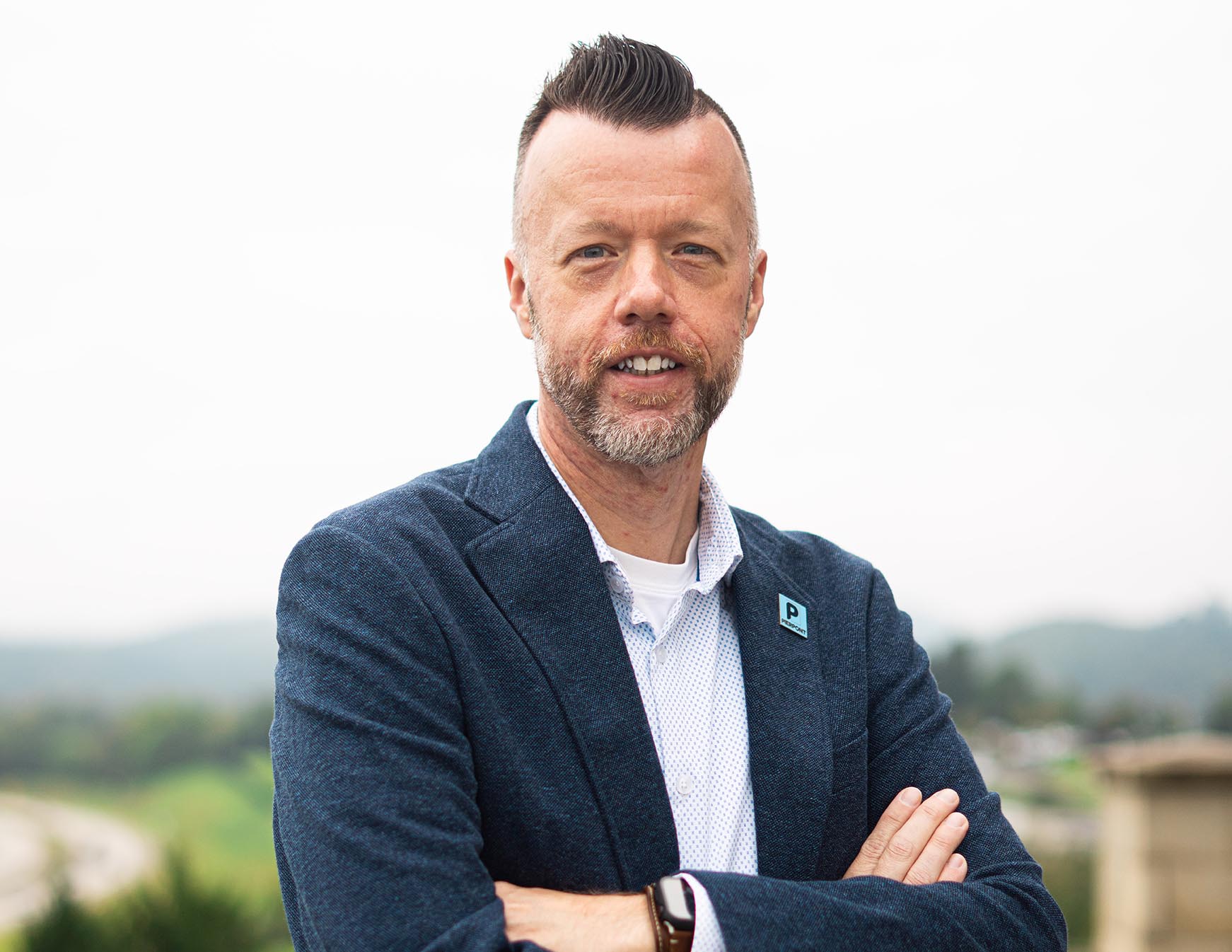
Growing up in Weirton, West Virginia, Dr. Michael Paul Waide saw how education could change the direction of a person’s life. Those lessons stayed with him throughout a career that has included work in healthcare, nonprofit leadership, and higher education. Today, that belief in opportunity, momentum, and meaningful educational pathways continues to shape his leadership as the fifth president of Pierpont Community & Technical College.
For Waide, community colleges have always been about helping people reach goals that once felt out of reach. Whether it’s a recent high school graduate, a working parent returning to school, or an adult learner pursuing a new career, he believes education should create clear pathways to opportunity.
That perspective has guided his work at Pierpont for years. Before becoming president, Waide served in a variety of academic roles, helping strengthen programs, support students, and expand workforce training opportunities across North Central West Virginia. Now, as the College enters its next chapter, he remains focused on the mission that first drew him to higher education: helping students build brighter futures for themselves, their families, and their communities. We sat down with him to reflect on his journey and discuss his hopes for the future of the College.
1. When you look back on your journey from faculty member to president, what moments stand out as turning points along the way?
I never set out with a plan to become a college president. I set out to make a difference in people’s lives, and education became one of the most meaningful ways I could do that.
I grew up in Weirton, West Virginia, in a steelmaking community. My dad was a steelworker, and I remember my mom telling me that I had a choice: I could go to the mill, or I could go to college. That was a pretty powerful message for a first-generation college student. I understood early on that education could open doors that might otherwise remain closed.
My career took me through healthcare, chaplaincy, nonprofit leadership, and eventually into the classroom. When I began teaching medical laboratory technology at Pierpont in 2008, I found something I genuinely loved. I could help students develop the knowledge and skills to enter a profession, earn a good living, and make a difference in their communities.
One turning point was moving from faculty member and program director into academic leadership. I began to see how the decisions we make about programs, resources, partnerships, and student services can affect far more students than those in any one classroom.
Another was serving as provost, particularly during periods of significant institutional change. Those experiences reinforced that leadership isn’t about a title. It’s about showing up, listening, building trust, and helping people move forward together.
And, of course, stepping into the presidency was a significant moment. But I still see myself as an educator first. The work has changed, and the responsibilities have grown, but my why hasn’t changed.
I want to help people see what’s possible for their lives and give them a pathway to get there.
2. You’ve spent many years serving Pierpont in different roles. What has kept you connected to the College and its mission?
That’s an easy one. It’s the people, and it’s the mission.
I’m a West Virginian. This is home. I understand the communities we serve because I grew up in a community very much like them. I understand the value of hard work, the importance of family, and what it means when someone gets an opportunity that changes the direction of their life.
Pierpont is a place where those opportunities happen every day.
I’ve worked with students who are the first in their families to attend college, adults who are returning to school after years in the workforce, and people who are trying to build a better life for their children. I’ve also worked alongside incredibly dedicated faculty and staff who believe in those students, often before the students fully believe in themselves.
We’ve been through our share of transitions and challenges as an institution. But what has kept me here is the belief that Pierpont matters. It matters to our students, to the employers who rely on us, and to the communities we serve.
I’ve had the privilege of serving this College in a number of roles, and each one has deepened that connection.
At the end of the day, I believe in what community colleges do. We’re in the business of changing lives through education. And I can’t think of a more meaningful way to spend my career.
3. What went through your mind when you learned you would become Pierpont’s fifth president?
First, I felt an enormous sense of gratitude, and, quite frankly, humility.
I’ve spent a significant part of my professional life at Pierpont. I’ve grown here, I’ve learned here, and I’ve had the opportunity to work alongside people I deeply respect. To be entrusted with leading an institution that means so much to me, and to our region, is something I take seriously.
But I also felt a real sense of excitement and responsibility.
We’ve worked hard to build momentum at Pierpont. We’ve strengthened our programs, grown enrollment, rebuilt relationships, and made meaningful progress as an institution. And we’ve done that together, through the commitment of our faculty, staff, Board, and community partners.
So my first thought wasn’t, “What am I going to accomplish as president?” It was, “How do we build on what we’ve accomplished together, and where do we go from here?”
I believe leadership is a form of service. I’ve carried that understanding throughout my career, whether I was working in healthcare, serving in chaplaincy, teaching in the classroom, or leading a college division.
Being president gives me an opportunity to serve Pierpont in a different way. It also gives me a responsibility to help our people succeed and make certain that our students remain at the center of the decisions we make.
I’m proud to be Pierpont’s fifth president. And I’m excited about what we can accomplish together.
4. When you think about the future, what do you hope Pierpont will become over the next several years?
My hope is that Pierpont will continue to become the college our region needs and the college our students deserve.
I want us to be known as a place where people can see a future for themselves, regardless of where they’re starting.
For some, that might mean earning an associate degree and entering the workforce. For others, it might mean earning a short-term credential, transferring to a university, or coming back to learn a new skill. And for a working adult, it might mean building upon what they’ve already learned and using that experience to move into a new career.
We need to create pathways that recognize those different needs.
I also want Pierpont to be a college that’s responsive. The world of work is changing. Technology is changing. The needs of our communities are changing. We have to be willing to innovate while staying grounded in our mission.
But here’s something I feel strongly about: growth alone isn’t enough.
Our focus this year is Every Student Forward. We can recruit more students, develop new programs, and build new facilities. Those things matter. But the real measure of our success is whether students are learning, persisting, completing their credentials, and achieving the goals that brought them to Pierpont.
And I want us to do that while continuing to be a place where people feel connected. Where a student is known by name. Where faculty and staff feel valued. Where our community partners know they have a seat at the table.
We have an opportunity to build something special here, not by becoming something we’re not, but by becoming an even stronger version of who we are.
5. How do you see the College helping strengthen the communities and workforce of North Central West Virginia?
I think about this question through the lens of the community where I grew up.
Weirton was a steel town. Generations of families built their lives around good jobs, strong industries, and the opportunity to make a living and raise a family. When those industries changed, the effects reached far beyond the workplace. They affected families, schools, businesses, and entire communities.
That experience shaped how I think about the role of a community college.
We have an important responsibility to help people prepare for the jobs that exist today, but also for the opportunities that are emerging tomorrow.
At Pierpont, we’re doing that through programs in healthcare, aviation maintenance, advanced manufacturing, information technology, and other fields important to our region.
Take aviation maintenance, for example. We’re preparing to build a new Aviation Education Center that will allow us to expand from approximately 130 students to a capacity of 200 to 230. That’s an investment in students, but it’s also an investment in an industry that’s important to North Central West Virginia.
Our work in healthcare is another example. We’re expanding pathways such as Surgical Technology and our LPN and Paramedic to RN Bridge to help people advance in their careers while strengthening the healthcare workforce.
But our role goes beyond preparing people for their first job.
Through partnerships with employers, workforce organizations, K-12 schools, and universities, we can help someone enter a career, build new skills, earn additional credentials, and continue advancing throughout their working life.
That’s important to me. A credential should be the foundation for a career, not the ceiling on one.
Ultimately, I want Pierpont to help create opportunities that allow people to build good lives right here in West Virginia. When our graduates find meaningful employment, support their families, and contribute to their communities, everyone benefits.
That’s what education that works means to me.
6. Is there a student story or experience that reminds you why this work matters?
There are so many. Having started my career at Pierpont as a faculty member, I’ve had the privilege of walking alongside students as they’ve worked toward their goals. Those experiences have stayed with me.
One story that stands out was shared by our admissions team. A first-generation student visited Pierpont and said, “I didn’t know college people could be this excited to see me.”
I think about that statement a lot.
For those of us who have spent our careers in higher education, it’s easy to forget that college can be an intimidating place. We understand how it works. We know the language, the processes, and the expectations.
But imagine being the first person in your family to walk through those doors. You may be wondering whether you belong, whether you can afford it, or whether you’re capable of succeeding.
And then someone welcomes you, learns your name, and takes an interest in your future. That’s where the relationship begins.
My own doctoral research focused on the resilience of rural community college students in Appalachia. One thing that work reinforced for me is that students often bring tremendous determination, but they also face real barriers. Sometimes what makes the difference is knowing that someone cares and is willing to help them navigate those challenges.
As an educator, I’ve seen students begin a program uncertain of themselves and finish with a sense of confidence and purpose. I’ve watched them become healthcare professionals and move into careers where they care for people in our communities.
Those are the moments that stay with you.
They remind me that we don’t simply educate students. We help people discover what they’re capable of becoming.
7. What would you say to someone who isn’t sure college is the right path for them?
First, I’d say that’s okay. You don’t have to have everything figured out right now.
I think sometimes we do young people, and adults, a disservice when we make them feel like there’s only one right path. The reality is that people have different interests, different responsibilities, and different goals.
College isn’t necessarily about spending four years in a classroom. It might mean earning a credential in a matter of months. It might mean completing a two-year degree. It might mean learning a trade, entering an apprenticeship, or starting at Pierpont and transferring to a university.
And it might mean taking one course to see what’s possible.
My advice would be to start with a conversation. Tell us what interests you. Tell us what you’re good at, what you’d like to do, and what concerns you. We can help you explore your options and understand what those pathways might look like.
I would also tell someone not to count themselves out.
Maybe you weren’t the strongest student in high school. Maybe you’ve been out of school for 20 years. Maybe you’re working full time, raising a family, or wondering how you’re going to afford it.
Those are real considerations, and we need to take them seriously. But they don’t have to define what’s possible for you.
I was a first-generation college student. I understand what education can mean for someone who is trying to find their way forward.
That’s why community colleges exist. We meet people where they are and help them take their next step.
You don’t have to know exactly where the road leads. You just need to be willing to explore what’s possible.
And we’d welcome the opportunity to have that conversation with you.
8. When students walk across the stage at graduation, what do you hope they’ve gained from their time at Pierpont besides a degree?
I hope they’ve gained confidence. I hope they’ve developed a sense of purpose. And I hope they leave knowing that they’re capable of more than they may have imagined when they first came to us.
Of course, I want our graduates to be well prepared for their careers. I want them to have the technical knowledge and professional competencies that employers expect.
But I also want them to have the skills that will serve them throughout their lives: the ability to communicate, solve problems, work with others, adapt to change, and continue learning.
Those skills matter whether someone is entering a hospital laboratory, working on an aircraft, starting a business, or pursuing another degree.
I also hope they’ve learned something about resilience.
Life doesn’t always go according to plan. I think most of us in Appalachia understand that. There will be setbacks, unexpected challenges, and moments when we have to figure out a different way forward.
I want our students to know that those moments don’t have to define them. They can learn, adapt, ask for help, and keep moving.
And finally, I hope they leave Pierpont with a sense of belonging and a desire to contribute to their communities.
When I look out at commencement, I see more than graduates. I see people whose accomplishments will affect their children, their families, their workplaces, and their communities.
A degree or credential represents what they’ve accomplished. But the confidence, relationships, skills, and sense of purpose they’ve developed will help them decide what comes next.
That’s what I hope our graduates carry with them.
And if they walk across that stage believing in themselves a little more than they did when they first walked through our doors, then I believe we’ve done something that truly matters.